Organic sleep • Practical guide
What to Know Before Pairing an Adjustable Bed with a Natural Latex Mattress
An adjustable base can turn a bed into a more flexible place to sleep, read or rest. Whether that flexibility works well with a natural latex mattress depends on more than the word “latex”: construction, thickness, support, frame design and the manufacturer’s guidance all matter.
Published November 6, 2026
At first glance, an adjustable bed seems simple: press a button, lift the head or feet, and settle into a new position. Beneath that small movement, though, a mattress and base are negotiating a physical relationship. The frame changes shape; the mattress must flex with it, remain supported and return to a stable surface when lowered.
Natural latex is often chosen for its springy, responsive feel and its ability to contour without the slow, deep sink associated with some other materials. Those qualities may make latex appealing for an adjustable setup, but they do not guarantee that every latex mattress is compatible with every adjustable base. A mattress is a complete structure, not a single ingredient. Its layers, bonding, cover, thickness and internal support all influence how it responds to repeated bending.
For shoppers in New York City, the decision may also involve a less glamorous set of questions: Can the base and mattress get through the building? Is there room to assemble and operate the frame? Does the bedroom have a suitable electrical outlet? These details are not footnotes. In a city where stairwells, elevators and compact rooms can shape a furniture purchase, the logistics belong in the plan from the beginning.
Start with compatibility, not assumptions
The first authority on mattress compatibility is the mattress manufacturer. The adjustable-base maker is the second. Check both sets of instructions before buying or pairing the pieces, and look for explicit language about adjustable foundations, powered bases or articulation. If the guidance is unclear, contact the manufacturers with the exact mattress model, size and base model. A general assurance that “latex is flexible” is not a substitute for confirmation about a particular construction.
Compatibility statements can be specific. A manufacturer may approve certain models, specify a minimum or maximum mattress thickness, limit use with particular frame configurations, or set conditions for warranty coverage. One model in a product range may be approved while another is not. If the mattress is modular, has a thick pillow-top, contains a separate support unit or uses a specialized foundation, those details may affect the answer.
Keep the response, product manuals and warranty terms together. If a problem later arises, documentation can help establish whether the setup was used as intended. Warranty language differs by brand, so do not assume that a mattress warranty automatically covers use on any adjustable base—or that using a base will void it. Read the actual terms.
- Confirm the exact mattress model is approved for adjustable-base use.
- Check whether the base maker lists limits on mattress type, weight or thickness.
- Ask whether the warranty has conditions concerning support, articulation or frame use.
- Verify that the base’s dimensions and weight capacity suit the mattress and sleepers.
- Save written guidance and installation instructions for future reference.
Why latex construction matters
Natural latex mattresses are not all built alike. Some use a single latex core; others combine several layers with different firmnesses. A mattress may also include wool, cotton, a quilted cover, a zippered encasement or other materials. Each part contributes to feel and function, and each can respond differently as the mattress bends.
Latex is resilient: when compressed, it generally pushes back rather than staying deeply indented. That quality can help a mattress adapt to a changing position, but resilience alone says little about long-term suitability. A thick, very firm mattress may require more force to bend than a thinner, more flexible one. A layered design may flex differently from a single-piece core. The cover must also accommodate movement without excessive tension, bunching or shifting.
Consider the mattress as a system. A powered base creates bends at defined points, commonly around the head and knees. The mattress needs to follow those curves while its weight remains supported across the frame. If it is too rigid for the base, movement may feel strained or uneven. If the mattress is not adequately supported, sections can sag or shift. The right answer comes from the model’s design and approved use—not from a broad claim about organic or natural materials.
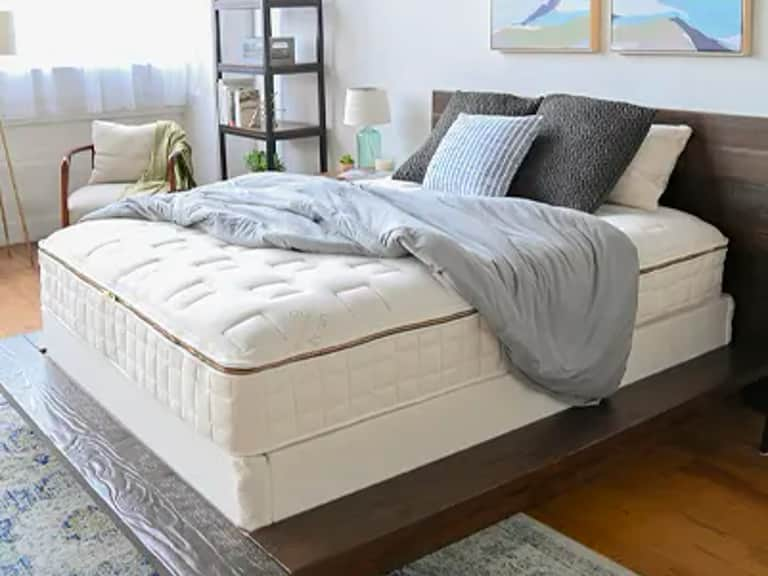
For shoppers comparing options, the Naturepedic EOS Classic Mattress is a layered design with customizable latex comfort and support components. Its construction makes the manufacturer’s instructions particularly relevant: before pairing it with a powered base, confirm compatibility for the precise configuration and size you intend to buy. Product details alone should not be read as blanket approval for every adjustable frame.
Thickness, firmness and the feel of movement
Thickness can influence how a mattress bends, but there is no universal rule that thinner is always better or that thicker is always incompatible. The materials and the way they are assembled matter just as much. A mattress with multiple substantial layers may behave differently from one made with a single core, even when the two have a similar profile. Follow the manufacturers’ stated limits rather than relying on a shortcut.
Firmness is another consideration. A firmer surface may feel more resistant as the base raises it, while a softer comfort layer may compress more readily. These are tendencies, not guarantees. Firmness labels are not standardized across all brands, and a mattress’s feel can vary with sleeper weight, sleep position and the angle of articulation. The practical question is whether the mattress is designed to flex safely and comfortably on that base.
Think about the positions you expect to use. A slight head elevation for reading is different from frequent, pronounced changes to both the head and foot sections. If you plan to use presets, massage functions or repeated adjustments, ask whether the mattress and frame are intended for that pattern. A good setup should move smoothly, without the mattress sliding, folding sharply or pulling away from the frame.
The base underneath the mattress
An adjustable bed is not simply a flat platform with hinges. Its deck, moving sections, motors, legs and control system all contribute to stability. Review the base’s specifications and installation requirements. Confirm that the size matches the mattress, that its capacity is adequate for the combined load, and that the frame is intended for the floor, legs or foundation arrangement you have planned.
Slat spacing deserves particular attention when a setup includes a slatted platform or a separate support structure. The mattress manufacturer may prescribe a maximum gap between slats or require a different kind of foundation. Those rules are intended to provide consistent support and protect the mattress from unsupported spans. Do not assume that a frame described as “adjustable” automatically has the correct surface for a specific latex mattress.
Inspect how the base supports the mattress in both flat and raised positions. The frame should provide support at its moving sections and should not leave the mattress bridging a broad gap. Retainer bars or other mattress-restraint features may help limit sliding, but their presence does not establish compatibility by itself. They should be installed and used as directed, without altering the mattress or base.
If you already own a bed frame, establish whether it can accommodate the adjustable unit. Some bases are designed to sit inside an existing frame; others require the frame to be removed or used in a particular way. Clearance beneath the bed, the location of legs and the space needed for the deck to move can all affect fit.
A measured approach to everyday use
Once the manufacturers confirm compatibility and the base is assembled according to its manual, begin with modest adjustments. Raise the head or feet gradually and notice how the mattress moves. Check that it remains centered, that the cover does not bunch, and that bedding does not become tightly stretched. Lower the base fully before making changes to the setup or repositioning the mattress.
Use the controls as intended and keep the area around the moving frame clear. Cords, storage bins, pets and bedding can interfere with the base’s movement. If the base makes an unusual sound, stops unexpectedly or appears unstable, consult its manual and support service rather than attempting a repair while it is powered. A powered frame contains moving parts and should be treated with appropriate care.
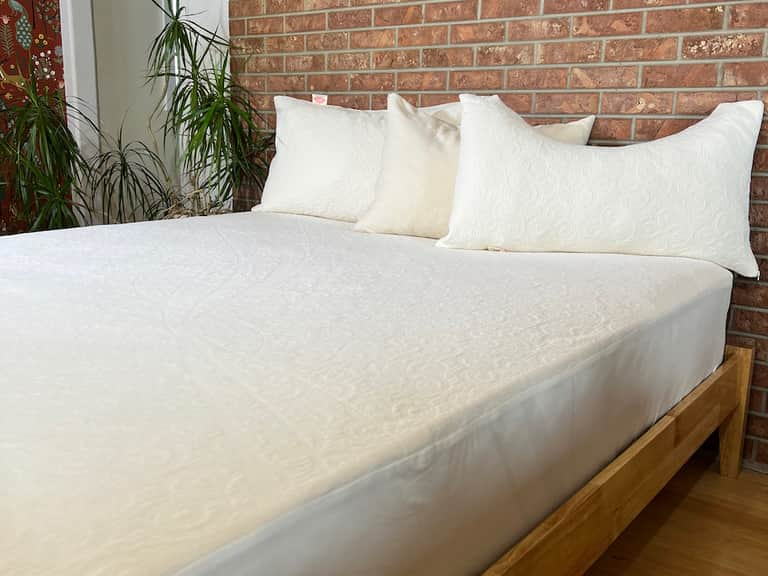
Mattress protectors and sheets also deserve a fit check. A fitted sheet with adequate pocket depth can stay in place more easily as the bed articulates, while a tightly stretched protector may pull at the corners or change how the surface feels. The Suite Sleep Organic Cotton Knit Mattress Protector is made from stretch-knit organic cotton and has 18-inch pockets. As with any bedding, confirm that its dimensions fit the mattress and follow the maker’s care instructions; a protector does not determine whether a mattress is suitable for an adjustable base.
Comfort is personal—and the base changes the equation
An adjustable base can change how a familiar mattress feels. Raising the head may reduce pressure in some positions or make reading more comfortable; elevating the legs may feel relaxing to some sleepers. But those effects vary from person to person and are not medical guarantees. A new angle can also change pressure distribution, how the pillow supports the neck and whether a partner’s movement is noticeable.
If possible, test the mattress and base together before committing, or understand the retailer’s trial and return policies. A showroom test on a flat foundation cannot fully reproduce the feel of articulation. Ask whether the trial covers the mattress alone or the base as well, who pays for pickup or return shipping, and whether opened products are eligible. Clarify these details before delivery, when changing course can be more complicated.
For couples, consider whether one shared base or a split configuration makes more sense. Separate adjustable sides can allow each sleeper to choose an angle, but they require the right mattress arrangement and compatible components. Check the dimensions, controls, synchronization options and bedding needs. A split setup may also affect delivery access and installation time.
Planning for a New York City bedroom
In New York City, furniture has to pass through the building before it can improve a night’s sleep. Measure the bedroom, doorway, hallway, stair turns and elevator interior—not just the space where the bed will sit. Ask the delivery company how the base is packaged and whether it arrives in sections. A mattress that compresses for shipping and a powered base with a rigid deck present different access challenges.
Confirm delivery rules with the building in advance. Some properties require a certificate of insurance, scheduled loading-dock access or specific delivery hours. Others have elevator reservations or restrictions on large items. If the apartment is a walk-up, ask about carrying arrangements and any additional charges. These are practical questions, but they can determine whether the delivery happens smoothly or has to be rescheduled.
After placement, leave enough clearance for the base to articulate and for people to move safely around it. Check outlet location and cord routing, keeping cables away from pinch points and walking paths. If you are renting, review any building requirements before making changes to electrical outlets or floor layout. Do not place a powered base where it blocks an exit or prevents access to other essential parts of the room.
Room dimensions matter in another way: a bed that fits when flat may feel much larger when raised. The head section can alter access to bedside tables, lamps and windows. Measure the footprint of the base and account for its full range of motion, especially in a compact room where a small change in clearance can matter.
Organic materials are one part of the decision
Choosing natural or organic materials can reflect priorities around sourcing, fiber production or the substances used in a product. Certifications may help verify particular claims, but they do not certify that a mattress works on a particular base. Keep the questions distinct: material credentials answer one set of concerns; structural compatibility answers another.
When assessing a mattress, read the materials description and certification details carefully. Ask what the certification covers and whether it applies to the finished product or to specific components. For a moving bed, also ask how the layers are secured, whether the cover is designed for repeated flexing and whether the brand publishes adjustable-base guidance. Clear answers are more useful than broad labels such as “natural,” “green” or “flexible.”
There is no need to treat the choice as a moral test. A good sleep setup is one that meets the sleeper’s comfort needs, fits the room and building, and is used within the manufacturer’s instructions. Sustainable priorities can guide the search without replacing basic questions about support, durability and fit.
A concise pre-purchase checklist
Before ordering, bring the mattress and base specifications together. The checklist below can help turn a complicated comparison into a manageable conversation with manufacturers or retailers.
- Model confirmation: Is this exact latex mattress model approved for this exact adjustable base?
- Construction: Are the mattress layers, cover and total thickness designed to flex repeatedly?
- Support: Does the base provide continuous, appropriate support in flat and raised positions?
- Frame details: Are slat spacing, platform requirements and any existing bed frame compatible?
- Warranty: Are there conditions related to the base, foundation or frequency of adjustment?
- Fit: Do mattress, base, bedding and room dimensions match?
- Delivery: Can the packaged components pass through the building and be installed in the room?
- Returns: What are the trial terms, pickup costs and policies for both mattress and base?
The bottom line
A natural latex mattress and an adjustable bed can make a considered pairing, but the material name is not the deciding factor. The mattress’s complete construction must be suited to repeated movement, the base must support it as designed, and both manufacturers’ instructions should agree. Check dimensions, slat or platform requirements, warranty conditions and delivery logistics before placing an order.
Then let the details do their quiet work. A compatible mattress should move with the base without drama, remain supported, and feel comfortable in the positions you actually use. For NYC residents, the best plan also accounts for the route from the curb to the bedroom. With those practical questions answered, adjustable flexibility can be an informed addition to an organic sleep setup rather than an expensive experiment.